A car paint job ranges from about $500 to $10,000+. A basic economy respray runs roughly $500–$1,500, a proper base coat/clear coat refinish with real prep runs $2,500–$5,000, and a sand-to-bare-metal showroom job runs $5,000 and up. The price gap is almost entirely prep, paint quality, and color matching — not the color itself.
It's one of the most common questions we hear, and the honest answer is: it depends on what you actually want the paint to do. A $500 quote and a $5,000 quote can both be called "a paint job," but they are not the same work, and they will not last the same number of years. Below is an honest breakdown of what each tier costs in 2026, what you're really paying for, and why the cheapest option so often turns into a second bill.
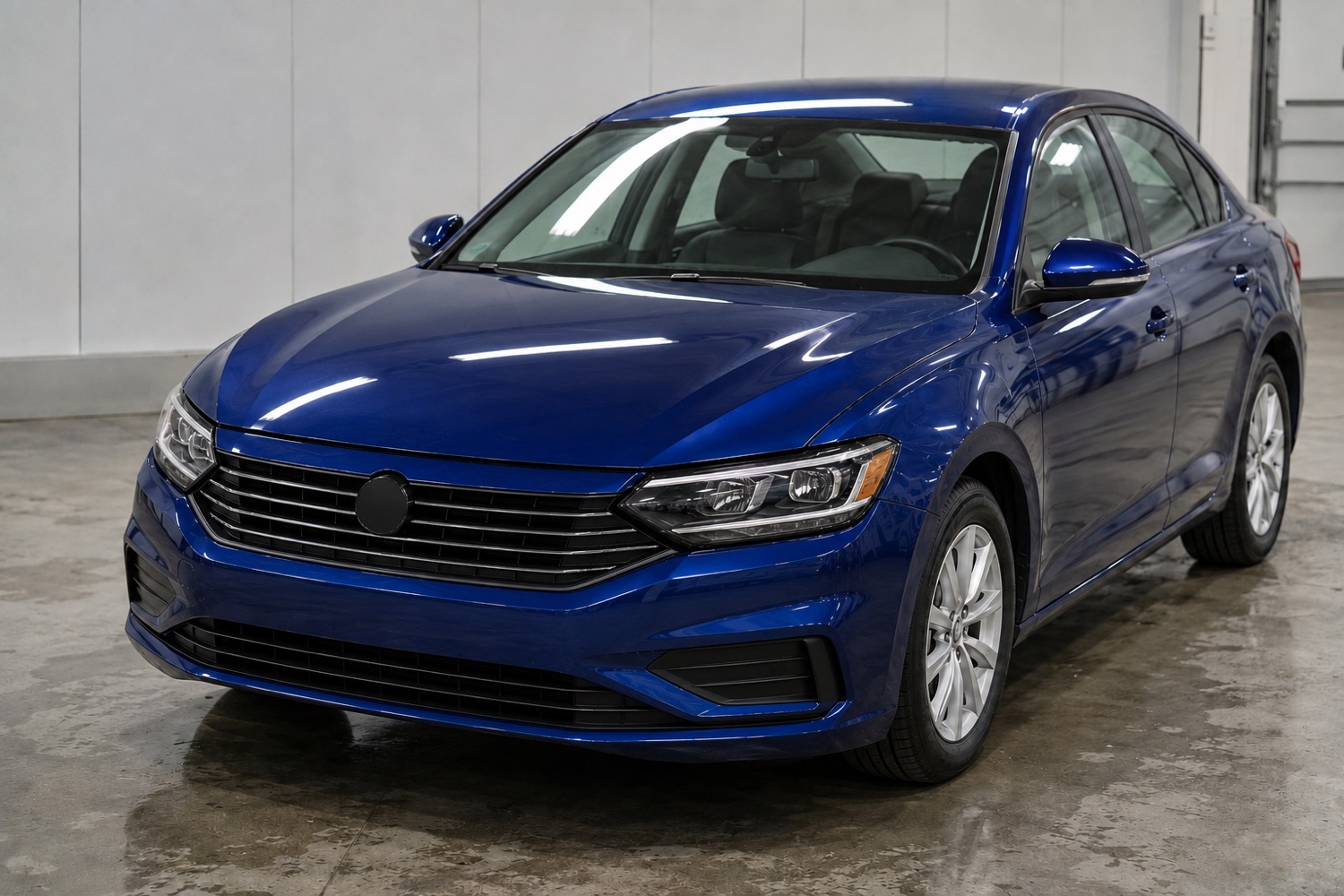
What does a full car repaint cost in 2026?
Nationally, prices sort into three honest tiers:
- Economy respray — about $500 to $1,500. A single-stage paint, minimal prep, and quick masking. Fine for a work truck you don't care about; not a match for a modern factory finish.
- Mid-grade base coat/clear coat — about $2,500 to $5,000. The surface is sanded uniformly, primed and sealed, sprayed with a two-stage color and clear system, and masked properly to avoid overspray. This is the honest floor for a repaint that looks right and lasts.
- Showroom / bare-metal — $5,000 to $10,000+. The car is stripped closer to bare metal, imperfections are corrected, and multiple coats of premium paint and clear are laid down and finished by hand.
Vehicle size moves the number too. A small car might land around $2,000–$3,500 for a quality refinish, while a large SUV or truck can run $3,500–$7,000 simply because there is more surface to prep and spray. The industry-wide average for a professional job sits around $2,500.
Why is there a $500 job and a $5,000 job for the "same" car?
Here's the part most quotes don't explain: prep is 70–80% of a quality paint job, and prep is exactly what a cheap job skips. A $500 respray gets to that price by not sanding the body to a uniform surface, priming only bare spots, masking quickly (so overspray lands on trim, glass, and seals), and spraying a single-stage paint with no separate clear coat.
A proper refinish spends most of its labor before any color is sprayed: washing and degreasing, sanding, filling and blocking imperfections, priming, sealing, and masking the entire car carefully. The paint is the fast part. That's why two shops can quote the same car ten times apart — they're quoting two completely different amounts of work.
Want a straight answer on your car?
Green Tech Collision Center will look at your vehicle and tell you honestly what it needs — no upsell, no pressure. OEM-grade auto body paint done right the first time.
Get My Free EstimateHow much does it cost to paint just one panel?
Most collision paintwork isn't a whole-car repaint at all — it's one or two panels. Panel pricing in 2026 generally looks like this:
- Bumper respray: about $350–$900, depending on damage and prep.
- Door or fender: about $500–$1,400. A straightforward repaint sits at the low end; dent repair plus blending pushes it toward the top.
The reason a single panel isn't as cheap as it sounds is blending. To make one new panel disappear next to years-old factory paint, a good shop feathers the new color into the adjacent panels so there's no visible line. That's more labor and material, but it's the difference between an invisible repair and an obvious patch. Premium factory finishes — a Tesla red, a tri-coat pearl white — can add a few hundred dollars in extra color, materials, and time.
What is factory color matching, and why does it matter?
Your car left the factory with a specific paint code, but no two cars age identically. Sun, washes, and time shift the color, so a shop can't just order "your" color and spray it. A quality shop pulls your paint code, then uses a spectrophotometer to read the actual, current color on your car and mixes a custom formula to match it. Skip that step and the repair reads as a slightly-off patch in daylight — the single most common giveaway of a cheap job.
Single-stage vs. base coat/clear coat — what's the difference?
This is the technical fork behind most of the price difference:
- Single-stage mixes color and gloss into one product, sprayed in one step. It's cheaper and it's what most $500 jobs use. It's less durable and harder to repair cleanly later.
- Base coat/clear coat is a two-stage system: a color layer, then a separate clear coat that carries the shine and, more importantly, the UV and chemical protection. Nearly every modern factory finish is base/clear, so matching your car properly means using the same system.
That clear coat is why a proper refinish holds its depth and gloss for a decade or more, while budget single-stage paint often starts fading or peeling in a few years.
Why do cheap paint jobs fail?
A budget paint job usually fails for predictable reasons, and they trace straight back to prep and materials: paint peels because it was sprayed over a surface that wasn't sanded, cleaned, or primed properly, so it never bonded. It fades and chalks because there's no clear coat shielding it from UV. And it looks "off" because the color was matched by eye, not by machine, and never blended into the surrounding panels. The trouble is that redoing a bad paint job usually costs more than doing it right the first time, because the failed layer has to be stripped before anything new can go on.
The bottom line
Painting a car isn't one price — it's a decision about how long you want the finish to last and how invisible you want the repair to be. For collision work, the goal isn't the cheapest quote; it's a color-matched, properly-prepped, clear-coated finish that restores your car to the way it left the factory. When you compare estimates, ask what prep is included, whether the color is machine-matched, and whether adjacent panels will be blended. Those answers tell you far more than the number at the bottom.
Prices in this article are national 2025–2026 ranges for general guidance. Your exact cost depends on your vehicle, its finish, and the condition of the panels. For a real number, get an in-person estimate.