A car repaired correctly is the same again — safe, structurally sound, and driving the way it did before. The honest catch is that this only holds when the work follows the manufacturer's exact procedures: computerized frame measuring, the right parts, safety-sensor recalibration, and a factory color match. A car repaired poorly is not the same, and may not be safe. That is why who does the work matters more than anything else.
It is the question almost everyone asks after an accident, and it deserves a straight answer instead of a sales pitch. The truth has two sides. Modern collision repair can genuinely return a vehicle to pre-accident condition, right down to the structure and the paint. But that outcome is not automatic. It depends entirely on whether the shop does every step the way the manufacturer designed it, or cuts corners you can't see. Here is what "the same" actually requires.
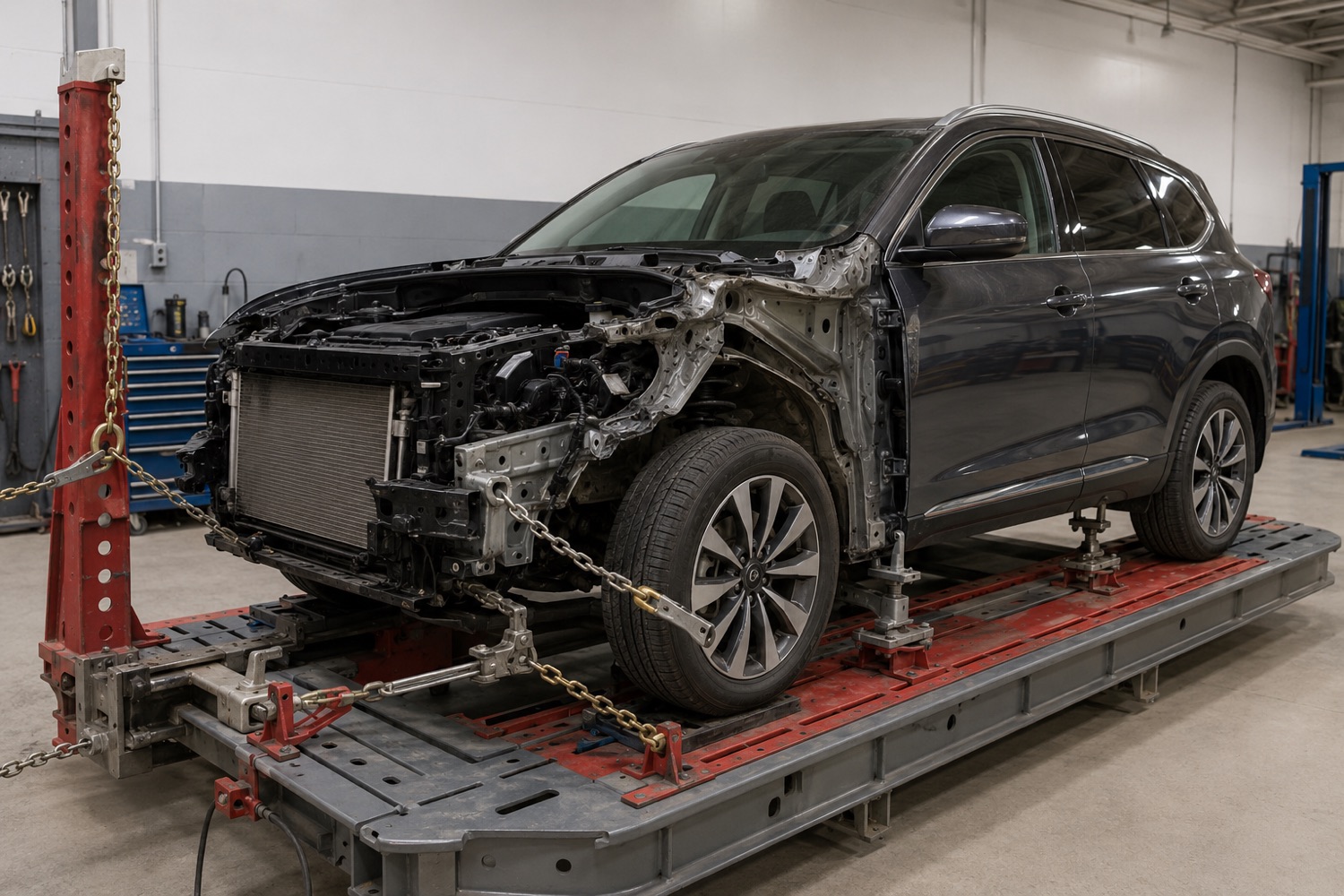
What does "restored to pre-accident condition" really mean?
The phrase gets used loosely, so it's worth being precise. "Restored to pre-accident condition" does not mean the car merely looks fixed. It means the vehicle's structure, safety systems, mechanical alignment, and finish all meet the standard they held before the impact. A car can look flawless in the parking lot and still be compromised underneath if the frame was never measured or a sensor was never recalibrated.
The difference between "looks repaired" and "is repaired" is the entire point of choosing a shop carefully. The visible bodywork is the easy part. Everything that makes the car the same happens in the steps you don't see.
Why do OEM procedures and parts matter?
Every automaker publishes detailed repair procedures for its vehicles — how to section a rail, which welds to use, how much heat aluminum can take, and which components must be replaced rather than straightened. Following those OEM (Original Equipment Manufacturer) procedures is what keeps the car behaving the way its engineers intended in a future crash.
Parts matter for the same reason. OEM parts are built to the exact fit, thickness, and crush characteristics of the original. Cheaper alternatives can look similar and cost less, but they don't always match how a panel is meant to absorb energy or how a bracket holds a sensor in place. We cover the trade-offs in depth in our guide to OEM vs. aftermarket parts — the short version is that the part choice affects fit, safety, and resale, and you deserve to know before anything is ordered.
How do shops make sure the frame is structurally straight?
On any impact beyond a minor scuff, the structure has to be verified, not eyeballed. Quality shops use computerized 3D measuring systems that compare hundreds of points on your vehicle against the manufacturer's factory dimensions. The goal is to bring the structure back to its "zero point" — the exact reference the car was built to, accurate to within millimeters.
When a structural section is too damaged to straighten, it is cut out along factory seams and replaced with new parts using the specific welding or joining method the automaker requires. This is what restores steering geometry, suspension tracking, and — critically — the way the body absorbs a future collision. Get the structure right and the car drives, tracks, and protects exactly as designed. Skip the measuring and you can end up with a car that pulls, wears tires unevenly, or doesn't crumple correctly next time.
Been in an accident in the Inland Empire?
Green Tech Collision Center repairs to OEM spec, measures every structural job, and documents the work. We'll handle your claim, too.
Start My Free EstimateDo the safety systems need to be recalibrated?
On most vehicles built in the last several years, yes — and this is the step that gets skipped most often. Today's cars rely on Advanced Driver Assistance Systems (ADAS): the cameras and radar behind automatic emergency braking, lane-keeping, adaptive cruise, and blind-spot monitoring. Those sensors depend on exact positioning.
Here's the honest warning: even a low-speed impact can shift a camera mount or a radar unit by a few millimeters, and a sensor off by a fraction of a degree can fail silently. The warning light stays off. The system looks like it works. But in a real emergency it may not trigger in time. That's why recalibration matters so much — it returns those systems to factory accuracy so they protect you when it counts. It's become common enough that more than a fifth of all repairable estimates now include a calibration, and depending on the vehicle it typically runs a few hundred dollars. A proper post-collision safety inspection confirms which systems your car needs recalibrated and verifies each one afterward.
Will the paint match the rest of the car?
With modern methods, a good shop makes a repair invisible. The factory paint code is only a starting point — sun, age, and weathering change your car's color over time, so matching to the code alone won't be right. Instead, technicians scan your actual paint with a spectrophotometer to capture the true current color, then adjust the formula and blend the new finish into the surrounding panels so there's no hard line where old meets new.
A correct match is more than color. It includes the clearcoat's gloss, depth, and texture, checked under different lighting to rule out a mismatch that only shows in certain light. Done right, you shouldn't be able to point to the repaired panel.
Is my car worth less after an accident, even repaired well?
This is where honesty matters most. A quality repair restores the car's safety and function completely — but the accident itself can still show up on the vehicle's history report, and that record can reduce resale value regardless of how well the work was done. It's called diminished value, and industry studies generally place it in the range of 10–20% of the repair cost, more for luxury or in-demand vehicles.
Two things are worth knowing. First, in California you may be able to recover diminished value from the at-fault driver's insurer — it's a separate claim from the repair. Second, a documented, OEM-correct repair using quality parts is your best defense: it's the difference between a car that reads as properly restored and one a future buyer walks away from. We break the process down in our guide to diminished value claims in California.
The bottom line
Will your car be the same? If it's repaired to the manufacturer's standard — structure measured, correct parts, safety systems recalibrated, paint matched, and the work documented — then yes: it's safe, sound, and drives like it did before. If those steps are skipped to hit a lower estimate, it won't be, and you may never see the difference until it matters most. The car doesn't decide which outcome you get. The shop does. Choose the one that will show you exactly how your vehicle will be repaired, and back it up.
This article is general information for drivers, not legal or insurance advice. Cost ranges are national estimates and vary by vehicle, damage, and region. For your specific policy or claim, consult your insurer.